

详解Android通知栏沉浸式/透明化完整解决方案
Google在Android 4.4版本加入了半透明的界面样式,在Android 5.0的时候推出了Material Design的概念。
这些样式的加入使得原本死板、丑陋、和App颜色不一致的通知栏变得更亲和、顺眼、用户体验更友好。
作者是常年做对日项目的,对日项目以界面简洁功能强大而著称。最近客户要求UI方面做一些改变,让App看上去给用户感觉更友好。所以就提到了Android 4.4以后的通知栏问题。
网上关于通知栏的文章铺天盖地,什么沉浸式,什么半透明。。。挺会拽词。也不乏有Android大神也写过类似的文章,但是那文章能看?长篇大论,程序员够累了,哪有那些时间看你在那里车轱辘话满天飞,说了一大顿表达不明白,浪费时间,写的一堆垃圾文章。
本篇文章杜绝冗余,做到最简单,最实用,对日项目比的不是代码量,而是最少的代码写出最漂亮的程序。
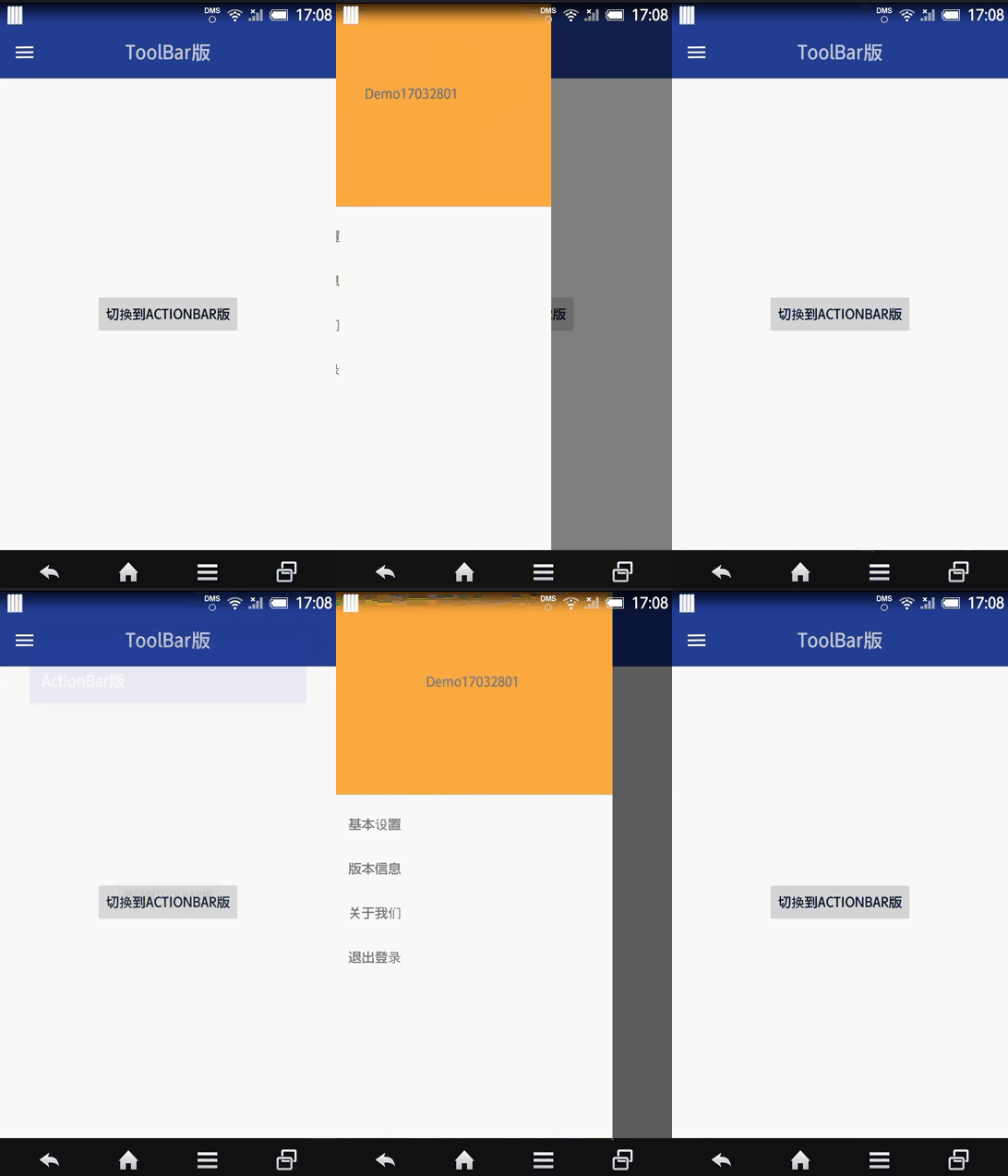
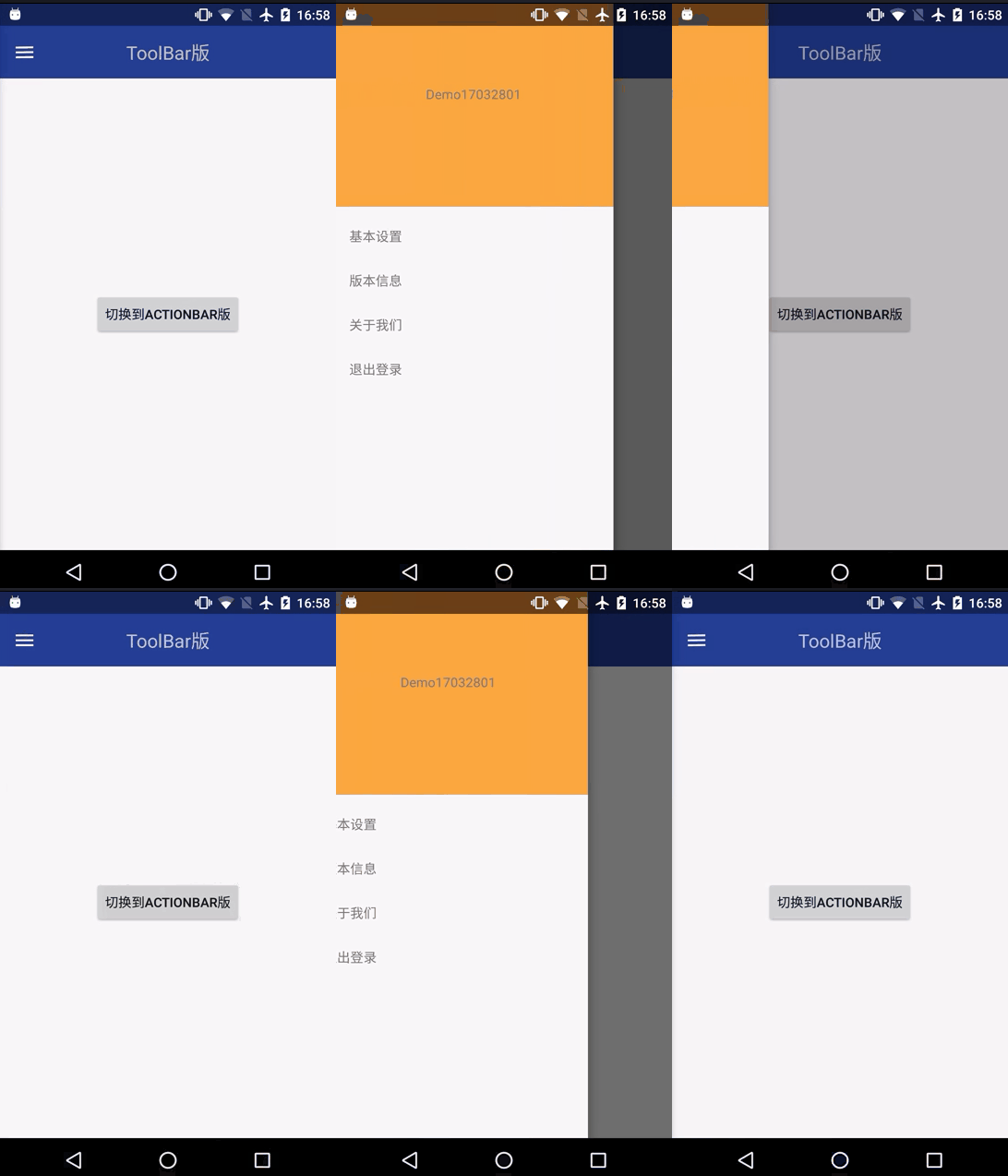
先上Gif图,Android 4.4 和 Android 6.0 实现样式效果之后的对比图
Android 4.4
Android 6.0
实现样式效果我们有两种方案
①DrawerLayout+Toolbar
②ActionBar
下面我们就来一一实现
①DrawerLayout+Toolbar
添加依赖库(谷歌提供)
compile 'com.android.support:design:25.3.1'
布局代码1:使用 DrawerLayout做最外层,引入NavigationView侧边抽屉控件
<?xml version="1.0" encoding="utf-8"?>
<android.support.v4.widget.DrawerLayout xmlns:android="http://schemas.android.com/apk/res/android"
 xmlns:app="http://schemas.android.com/apk/res-auto"
 xmlns:tools="http://schemas.android.com/tools"
 android:id="@+id/id_drawerlayout"
 android:layout_width="match_parent"
 android:layout_height="match_parent"
 tools:context="com.tnnowu.android.demo17032801.MainActivity">

 <include layout="@layout/content_layout" />

 <android.support.design.widget.NavigationView
 android:id="@+id/id_navigationview"
 android:layout_width="match_parent"
 android:layout_height="match_parent"
 android:layout_gravity="left"
 app:itemTextColor="@color/c_light_gray3" />

</android.support.v4.widget.DrawerLayout>
布局代码2:里层嵌套Toolbar
<?xml version="1.0" encoding="utf-8"?>
<LinearLayout xmlns:android="http://schemas.android.com/apk/res/android"
 xmlns:app="http://schemas.android.com/apk/res-auto"
 android:layout_width="match_parent"
 android:layout_height="match_parent"
 android:orientation="vertical">

 <android.support.v7.widget.Toolbar
 android:id="@+id/toolbar"
 android:layout_width="match_parent"
 android:layout_height="wrap_content"
 android:background="#30469b"
 android:paddingTop="@dimen/toolbar_padding_top"
 app:popupTheme="@style/ThemeOverlay.AppCompat.Light"
 app:theme="@style/ThemeOverlay.AppCompat.Dark.ActionBar">

 <TextView
  android:layout_width="wrap_content"
  android:layout_height="wrap_content"
  android:layout_gravity="center"
  android:text="ToolBar版"
  android:textSize="20sp" />

 </android.support.v7.widget.Toolbar>

 <!--内容显示布局-->
 <RelativeLayout
 android:layout_width="match_parent"
 android:layout_height="match_parent">

 <Button
  android:id="@+id/goToActionBar"
  android:layout_width="wrap_content"
  android:layout_height="wrap_content"
  android:layout_centerInParent="true"
  android:text="切换到ActionBar版" />
 </RelativeLayout>

</LinearLayout>
Style样式:无ActionBar
<style name="AppThemeNoActionBar" parent="Theme.AppCompat.Light.NoActionBar">
 <!-- Customize your theme here. -->
 <item name="colorPrimary">@color/colorPrimary</item>
 <item name="colorPrimaryDark">@color/colorPrimaryDark</item>
 <item name="colorAccent">@color/colorAccent</item>
</style>
主程序代码:除了要在onCreate()里面初始化 DrawerLayout、NavigationView、Toolbar控件 即initViews(),还要在onCreate()里面添加手机系统版本判断和相应的样式适配initImmersive()
private void initViews() {
 mDrawerLayout = (DrawerLayout) findViewById(R.id.id_drawerlayout);
 mNagigationView = (NavigationView) findViewById(R.id.id_navigationview);
 mNagigationView.inflateHeaderView(R.layout.header_nav);
 mNagigationView.inflateMenu(R.menu.menu_nav);
 mToolbar = (Toolbar) findViewById(R.id.toolbar);
 mBtn = (Button) findViewById(R.id.goToActionBar);
 mToolbar.setTitle("");
 if (mToolbar != null) {
  setSupportActionBar(mToolbar);
 }
 ActionBarDrawerToggle mActionBarDrawerToggle = new ActionBarDrawerToggle(this, mDrawerLayout, mToolbar, R.string.open, R.string.close);
 mActionBarDrawerToggle.syncState();
 mDrawerLayout.setDrawerListener(mActionBarDrawerToggle);
 mBtn.setOnClickListener(new View.OnClickListener() {
  @Override
  public void onClick(View v) {
  startActivity(new Intent(MainActivity.this, DemoActionBarActivity.class));
  }
 });
 }

private void initImmersive() {
 if (Build.VERSION.SDK_INT >= Build.VERSION_CODES.KITKAT) {
  WindowManager.LayoutParams localLayoutParams = getWindow().getAttributes();
  localLayoutParams.flags = (WindowManager.LayoutParams.FLAG_TRANSLUCENT_STATUS | localLayoutParams.flags);
  if (Build.VERSION.SDK_INT < Build.VERSION_CODES.LOLLIPOP) {
  //将侧边栏顶部延伸至status bar
  mDrawerLayout.setFitsSystemWindows(true);
  //将主页面顶部延伸至status bar;虽默认为false,但经测试,DrawerLayout需显示设置
  mDrawerLayout.setClipToPadding(false);
  }
 }
 }
这样Drawlayout + Toolbar就实现了样式改变。
②ActionBar
布局代码
<?xml version="1.0" encoding="utf-8"?>
<LinearLayout xmlns:android="http://schemas.android.com/apk/res/android"
 android:layout_width="match_parent"
 android:layout_height="match_parent"
 android:background="@color/colorPrimary"
 android:fitsSystemWindows="true"
 android:orientation="vertical">

 <!--内容显示布局-->
 <RelativeLayout
 android:layout_width="match_parent"
 android:layout_height="match_parent"
 android:background="@color/c_light_white">

 <Button
  android:id="@+id/goBack"
  android:layout_width="wrap_content"
  android:layout_height="wrap_content"
  android:layout_centerInParent="true"
  android:text="返回到ToolBar版" />
 </RelativeLayout>

</LinearLayout>
Style样式:有ActionBar
<style name="AppThemeActionBar" parent="Theme.AppCompat.Light.DarkActionBar">
 <!-- Customize your theme here. -->
 <item name="colorPrimary">@color/colorPrimary</item>
 <item name="colorPrimaryDark">@color/colorPrimaryDark</item>
 <item name="colorAccent">@color/colorAccent</item>
</style>
主程序代码:
public class DemoActionBarActivity extends AppCompatActivity {

 private Button mBtn;

 @Override
 protected void onCreate(Bundle savedInstanceState) {
 super.onCreate(savedInstanceState);
 setContentView(R.layout.activity_main_actionbar);

 if (Build.VERSION.SDK_INT >= Build.VERSION_CODES.KITKAT) {
  WindowManager.LayoutParams localLayoutParams = getWindow().getAttributes();
  localLayoutParams.flags = (WindowManager.LayoutParams.FLAG_TRANSLUCENT_STATUS | localLayoutParams.flags);

 }

 initView();
 }

 private void initView() {
 mBtn = (Button) findViewById(R.id.goBack);
 mBtn.setOnClickListener(new View.OnClickListener() {
  @Override
  public void onClick(View v) {
  finish();
  }
 });
 }

}
这样ActionBar就实现了样式改变。
文章对应的项目地址:ImmersiveDemo_jb51.rar
以上就是本文的全部内容,希望对大家的学习有所帮助,也希望大家多多支持脚本之家。
相关文章
 在android开发中Listview是一个很重要的组件,它以列表的形式根据数据的长自适应展示具体内容,用户可以自由的定义listview每一列的布局,接下来通过本文给大家介绍Listview加载的性能优化是如何实现的,对listview性能优化相关知识感兴趣的朋友一起学习吧2016-01-01
 这篇文章主要为大家详细介绍了Android Canvas自定义实现时钟效果,文中示例代码介绍的非常详细,具有一定的参考价值,感兴趣的小伙伴们可以参考一下2019-12-12
 这篇文章主要为大家详细介绍了Pagerslidingtabstrip菜单标题栏的制作方法,具有一定的参考价值,感兴趣的小伙伴们可以参考一下2017-10-10
Android TextView中文字通过SpannableString设置属性用法示例
这篇文章主要介绍了Android TextView中文字通过SpannableString设置属性用法,结合实例形式分析了TextView控件中SpannableString类相关属性的使用技巧,需要的朋友可以参考下2016-08-08 这篇文章主要介绍了gradle中的properties文件详解,文中通过示例代码介绍的非常详细,对大家的学习或者工作具有一定的参考学习价值,需要的朋友们下面随着小编来一起学习学习吧2020-09-09
 这篇文章主要介绍了Android 自定义TextView实现滑动解锁高亮文字的相关资料,需要的朋友可以参考下2018-03-03
 这篇文章主要为大家介绍了解决Android SELinux权限问题记录分析,有需要的朋友可以借鉴参考下,希望能够有所帮助,祝大家多多进步,早日升职加薪2023-11-11
 这篇文章主要介绍了Android Studio实现发短信功能,非常不错,具有参考借鉴价值,需要的朋友可以参考下2017-06-06
 这篇文章主要为大家详细介绍了Android开源库自定义相机模块,具有一定的参考价值,感兴趣的小伙伴们可以参考一下2018-05-05
 本篇文章把android中的权限进行了集合汇总。需要的朋友参考下2013-05-05
最新评论