

Android拦截并获取WebView内部POST请求参数的实现方法
起因:
有些时候自家APP中嵌入的H5页面并不是自家的。但是很多时候又想在H5不知情的情况下获取H5内部请求的参数,这应该怎么做到呢?
带着这个疑问,就有了这篇博客。
实现过程:
方案一:
最开始想到的方案是直接拦截H5中所有的请求:
webView.setWebViewClient(new WebViewClient() {
  @Override
  public WebResourceResponse shouldInterceptRequest(WebView view, WebResourceRequest request) {
    try {
      URL url = new URL(request.getUrl());
    } catch (MalformedURLException e) {
      e.printStackTrace();
    }
    Log.e("InternetActivity", request + "");
    return super.shouldInterceptRequest(view, request);
  }

});
但是通过此方法只能获取get请求的参数(因为参数直接拼在了url链接中),对于post请求的参数无可奈何。
方案二:
后来参考了request_data_webviewclient,有了新的实现方式,具体原理为:给H5注入一段js代码,目的是在每次Ajax请求都会调用Android原生的方法,将请求参数传给客户端。
具体流程如下:
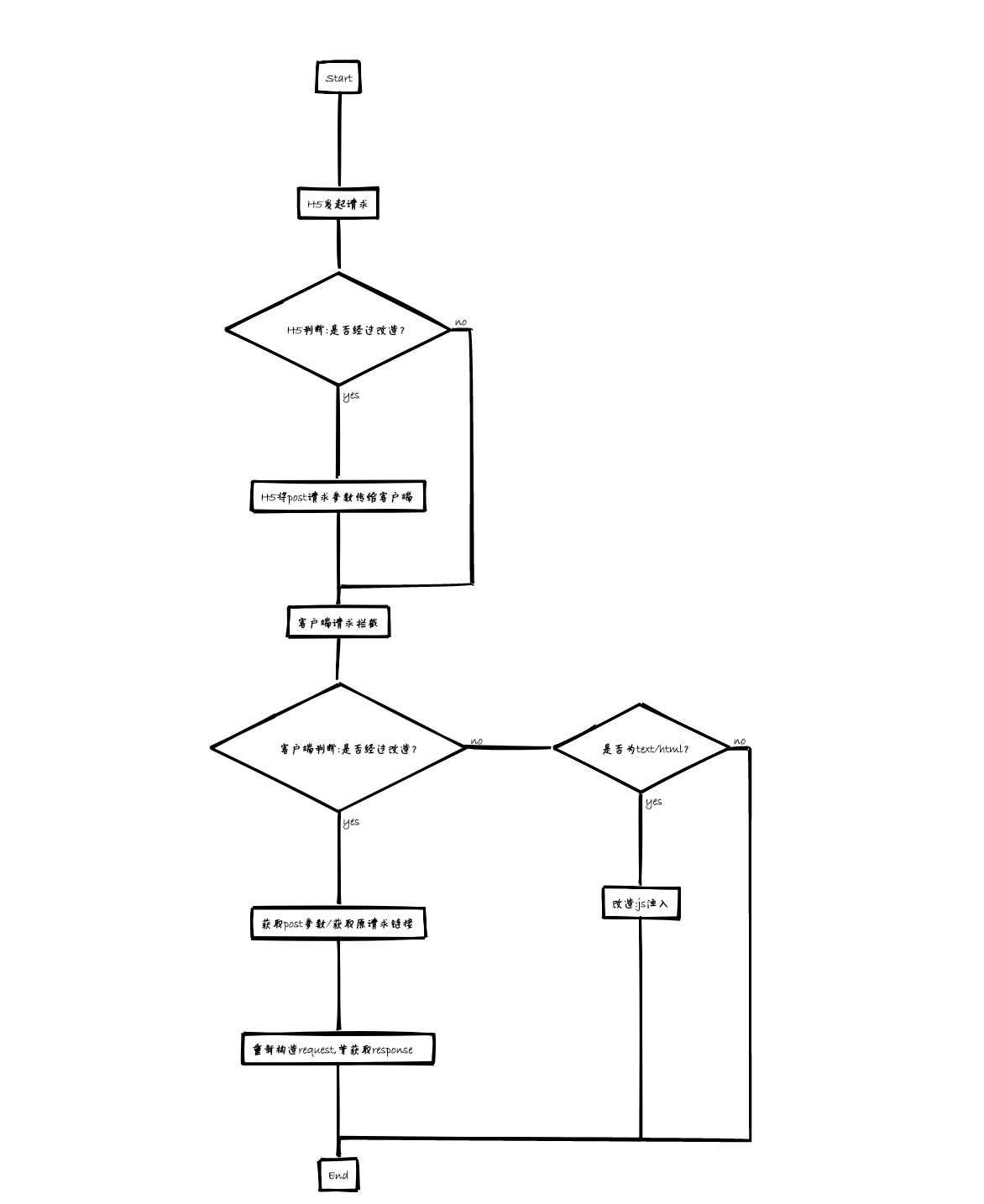
其中,
js注入代码:
<script language="JavaScript">
  function generateRandom() {
   return Math.floor((1 + Math.random()) * 0x10000)
    .toString(16)
    .substring(1);
  }
  // This only works if `open` and `send` are called in a synchronous way
  // That is, after calling `open`, there must be no other call to `open` or
  // `send` from another place of the code until the matching `send` is called.
  requestID = null;
  XMLHttpRequest.prototype.reallyOpen = XMLHttpRequest.prototype.open;
  XMLHttpRequest.prototype.open = function(method, url, async, user, password) {
    requestID = generateRandom()
    var signed_url = url + "AJAXINTERCEPT" + requestID;
    this.reallyOpen(method, signed_url , async, user, password);
  };
  XMLHttpRequest.prototype.reallySend = XMLHttpRequest.prototype.send;
  XMLHttpRequest.prototype.send = function(body) {
    interception.customAjax(requestID, body);
    this.reallySend(body);
  };
</script>
客户端拦截请求:
@Override
public final WebResourceResponse shouldInterceptRequest(final WebView view, WebResourceRequest request) {
  String requestBody = null;
  Uri uri = request.getUrl();
  // 判断是否为Ajax请求(只要链接中包含AJAXINTERCEPT即是)
  if (isAjaxRequest(request)) {
    // 获取post请求参数
    requestBody = getRequestBody(request);
    // 获取原链接
    uri = getOriginalRequestUri(request, MARKER);
  }
  // 重新构造请求,并获取response
  WebResourceResponse webResourceResponse = shouldInterceptRequest(view, new WriteHandlingWebResourceRequest(request, requestBody, uri));
  if (webResourceResponse == null) {
    return webResourceResponse;
  } else {
    return injectIntercept(webResourceResponse, view.getContext());
  }
}
客户端注入js代码:
private WebResourceResponse injectIntercept(WebResourceResponse response, Context context) {
  String encoding = response.getEncoding();
  String mime = response.getMimeType();
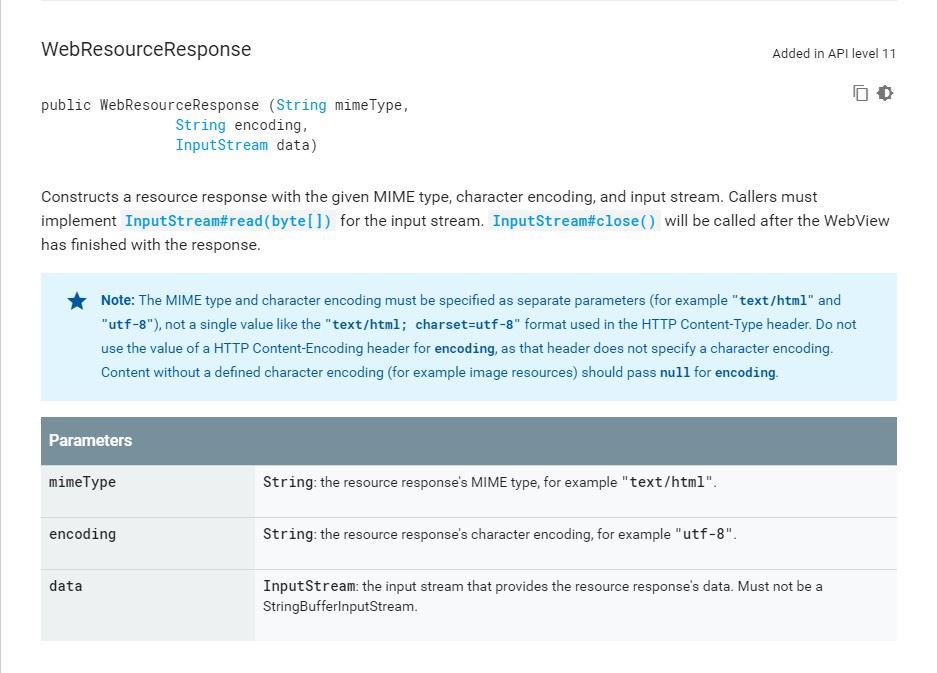
  // WebResourceResponse的mime必须为"text/html",不能是"text/html; charset=utf-8"
  if (mime.contains("text/html")) {
    mime = "text/html";
  }
  InputStream responseData = response.getData();
  InputStream injectedResponseData = injectInterceptToStream(
      context,
      responseData,
      mime,
      encoding
  );
  return new WebResourceResponse(mime, encoding, injectedResponseData);
}
注:根据谷歌官方文档,mime必须为"text/html"。
反思:
•开发过程中遇到了页面一直显示不了的问题,实际上就是因为获取到的mime是"text/html; charset=utf-8",得改成"text/html";
•通过此方法也可篡改response与request,但不要滥用;
•所以说,Android确实不安全!
GitHub地址:webview_post_data
总结
以上所述是小编给大家介绍的Android拦截并获取WebView内部POST请求参数的实现方法,希望对大家有所帮助,如果大家有任何疑问请给我留言,小编会及时回复大家的。在此也非常感谢大家对脚本之家网站的支持!
如果你觉得本文对你有帮助,欢迎转载,烦请注明出处,谢谢!
相关文章

Android开发之浏览器用法实例详解(调用uc,opera,qq浏览器访问网页)
这篇文章主要介绍了Android开发之浏览器用法,结合实例形式详细分析了Android调用浏览器的具体步骤与相关使用技巧,需要的朋友可以参考下2016-01-01 这篇文章主要为大家详细介绍了Android如何实现SubMenu子菜单的效果,文中的示例代码讲解详细,对我们学习Android有一定的帮助,感兴趣的可以了解一下2022-11-11
 这篇文章主要为大家分享了Android网易有道词典案例源码,具有一定的参考价值,感兴趣的小伙伴们可以参考一下2017-05-05
Flutter开发setState能否在build中直接调用详解
这篇文章主要为大家介绍了Flutter开发setState能否在build中直接调用详解,有需要的朋友可以借鉴参考下,希望能够有所帮助,祝大家多多进步,早日升职加薪2022-10-10
Android将Glide动态加载不同大小的图片切圆角与圆形的方法
这篇文章主要给大家介绍了关于Android如何将Glide动态加载不同大小的图片切圆角与圆形的方法,文中通过示例代码介绍的非常吸纳关系,对各位Android开发者们具有一定的参考学习价值,需要的朋友们下面来一起学习学习吧。2017-11-11 TextView实现跑马灯效果,就这么简单轻松实现,这篇文章介绍了TextView制作跑马灯效果的方法,具有一定的参考价值,感兴趣的小伙伴们可以参考一下2017-08-08
 做UI布局,尤其是遇到比较复杂的多重LinearLayout嵌套,常常会被一些比较小的问题困扰上半天,可是无论怎样设置layout_gravity属性,都无法达到效果2012-11-11
 本篇文章主要介绍了Android仿360悬浮小球自定义view实现示例,具有一定的参考价值,感兴趣的小伙伴们可以参考一下。2017-03-03
在AndroidManifest.xml中uses-sdk内属性意思
本文为大家讲解下minSdkVersion、targetSdkVersion、maxSdkVersion、target API level四个数值的意思与区别,感兴趣的朋友可以参考下哈2013-06-06 获取音乐文件的内置专辑图片这是在播放音乐时的一个很不错的功能,下面与大家分享下具体的实现思路,有类似需求的朋友可以参考下哈2013-06-06
最新评论