

Java异步编程Future应用方式
1 Future接口介绍
此时有的人会说,对于任务并行需求,直接通过多线程实现不就可以了, 要注意,对于多线程的实现,java提供了三种方式:继承Thread类、实现Runnable接口和实现Callable接口。
但是业务代码在执行时会考虑执行顺序的问题,直接基于这些方式实现多线程会出现两个问题:
- 1)要想控制线程执行顺序,会通过join()等待线程结束,那这样的话又回归到了阻塞式调用的思路上,违背了并行的需求。 另外还可以通过wait()、notify()、notifyAll()结合状态变量实现,但实现起来过于复杂。
- 2)线程执行完之后,要想获取线程执行结果,还要用过共享变量或线程间通信等方式来获取,同样过于复杂。为了解决上述问题,Java5中推出了Future,其初衷就是用于构建复杂并行操作。内部方法在返回时,不是返回一个值,而是返回Future对象。其本质是在执行主业务的同时,异步的执行其他分业务,从而利用原本需要同步执行时的等待时间去执行其他的业务,当需要获取其结果时,再进行获取。
Java官网对于Future的描述:

Future表示异步计算的结果。 提供了一些方法来检查计算是否完成,等待其完成以及检索计算结果。 只有在计算完成后才可以使用get方法检索结果,必要时将其阻塞,直到准备就绪为止。 取消通过cancel方法执行。 提供了其他方法来确定任务是正常完成还是被取消。 一旦计算完成,就不能取消计算。
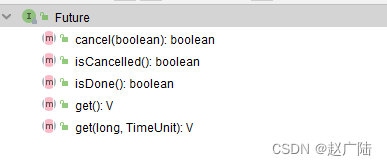
在Future接口中有五个抽象方法:
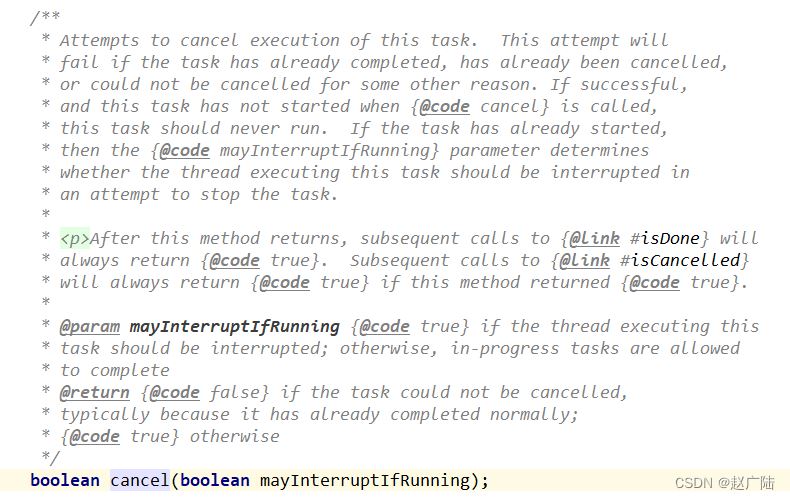
cancel():取消任务, 取消成功返回true;入参mayInterruptIfRunning表示是否允许取消正在执行中的任务。
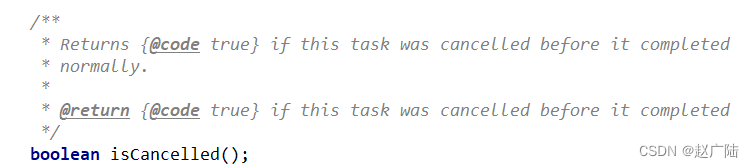
isCancelled():返回布尔值,代表是否取消成功。
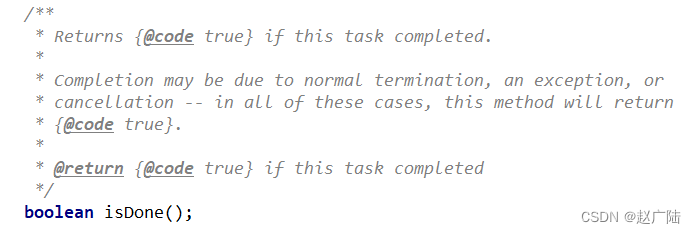
isDone():返回布尔值,代表是否执行完毕。
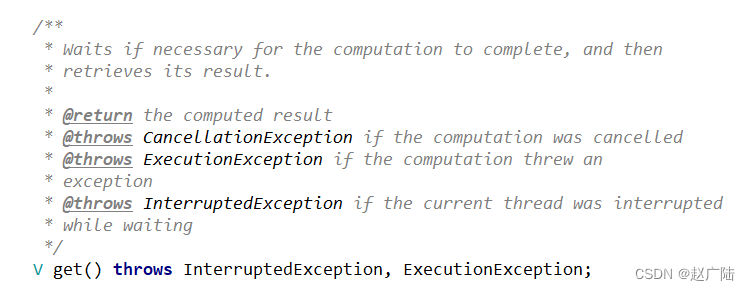
get():返回Future对象,获取执行结果,如果任务没有完成会阻塞到任务完成再返回。
2 Future应用
Future的使用通常需要配合ExecutorService和Callable一起
使用,使用示例如下:
public class FutureAsyncDemo {
  static Random random = new Random();
  static ExecutorService executor =
Executors.newCachedThreadPool();
  //接收文章名称,获取并计算文章分数
  public static int getArticleScore(String
aname){
    Future<Integer> futureA =
executor.submit(new
CalculateArticleScoreA());
    Future<Integer> futureB =
executor.submit(new
CalculateArticleScoreA());
    Future<Integer> futureC =
executor.submit(new
CalculateArticleScoreA());
    doSomeThingElse();
    Integer a = null;
    try {
      a = futureA.get();
   } catch (InterruptedException e) {
      futureA.cancel(true);
      e.printStackTrace();
   } catch (ExecutionException e) {
      futureA.cancel(true);
       e.printStackTrace();
   }
    Integer b = null;
    try {
      b = futureB.get();
   } catch (InterruptedException e) {
      futureB.cancel(true);
      e.printStackTrace();
   } catch (ExecutionException e) {
      futureB.cancel(true);
      e.printStackTrace();
   }
    Integer c = null;
    try {
      c = futureC.get();
   } catch (InterruptedException e) {
      futureC.cancel(true);
      e.printStackTrace();
   } catch (ExecutionException e) {
      futureC.cancel(true);
      e.printStackTrace();
   }
    executor.shutdown();
    return a+b+c;
 }
  private static void doSomeThingElse() {
    System.out.println("exec other
things");
 }
  public static void main(String[] args) {

 System.out.println(getArticleScore("demo"))
;
 }
}
class CalculateArticleScoreA implements
Callable<Integer>{
  @Override
  public Integer call() throws Exception {
    //业务代码
    Random random = new Random();
    TimeUnit.SECONDS.sleep(3);

 System.out.println(Thread.currentThread().g
etName());
    return random.nextInt(100);
 }
}
执行结果
exec other things
pool-1-thread-1
pool-1-thread-3
pool-1-thread-2
159
上述方法改造了calculateArticleScore(),在其内部基于线程池调用重写了Callable接口中的call(),并在call()中对具体业务完成编码,并且让其在执行时睡三秒钟。根据结果可以看到,先调用了计算文章分数方法,其内部开启了子线程去执行任务,并且子线程在执行时,并没有阻塞主线程的执行。
当主线程需要结果时,在通过返回的Future来获取子任务中的返回值。
3 Future并行变串行问题解析
刚才已经基于Future演示了并行执行的效果,已经达到了期望,但是在使用的过程中,其实还有个坑需要说明。
对于Future的使用,如稍加不注意,就会让并行变为串行。
示例代码如下:
public class FutureAsyncDemo {
  static ExecutorService executor =
Executors.newCachedThreadPool();
  //接收文章名称,获取并计算文章分数
  public static int getArticleScore(String
aname){
    Future<Integer> futureA =
executor.submit(new
CalculateArticleScoreA());
    Future<Integer> futureB =
executor.submit(new
CalculateArticleScoreB());
     Future<Integer> futureC =
executor.submit(new
CalculateArticleScoreC());
    doSomeThingElse();
    Integer a = 0;
    try {
      a = futureA.get();
   } catch (InterruptedException e) {
      futureA.cancel(true);
      e.printStackTrace();
   } catch (ExecutionException e) {
      futureA.cancel(true);
      e.printStackTrace();
   }
    Integer b = 0;
    try {
      b = futureB.get();
   } catch (InterruptedException e) {
      futureB.cancel(true);
      e.printStackTrace();
   } catch (ExecutionException e) {
      futureB.cancel(true);
      e.printStackTrace();
   }
    Integer c = 0;
    try {
      c = futureC.get();
   } catch (InterruptedException e) {
       futureC.cancel(true);
      e.printStackTrace();
   } catch (ExecutionException e) {
      futureC.cancel(true);
      e.printStackTrace();
   }
    executor.shutdown();
    return a+b+c;
 }
  private static void doSomeThingElse() {
    System.out.println("exec other
things");
 }
  public static void main(String[] args) {

 System.out.println(getArticleScore("demo"))
;
 }
}
class CalculateArticleScoreA implements
Callable<Integer>{
  @Override
  public Integer call() throws Exception {
    Random random = new Random();
    TimeUnit.SECONDS.sleep(10);

 System.out.println(Thread.currentThread().g
etName());
    return random.nextInt(100);
 }
}
class CalculateArticleScoreB implements
Callable<Integer>{
  @Override
  public Integer call() throws Exception {
    Random random = new Random();
    TimeUnit.SECONDS.sleep(20);

 System.out.println(Thread.currentThread().g
etName());
    return random.nextInt(100);
 }
}
class CalculateArticleScoreC implements
Callable<Integer>{
  @Override
  public Integer call() throws Exception {
    Random random = new Random();
    TimeUnit.SECONDS.sleep(30);

 System.out.println(Thread.currentThread().g
etName());
    return random.nextInt(100);
 }
 }
上述代码加计算得分方法复制出来两份,各自休眠10秒、20秒、30秒。当方法返回Future之后,调用get()进行值获取时,发现每次调用时都需要进行等待。
这样可以发现,之前的并行现在变成了串行了!!!! 这个问题为什么会产生呢?需要看一下Future中对于get()的介绍
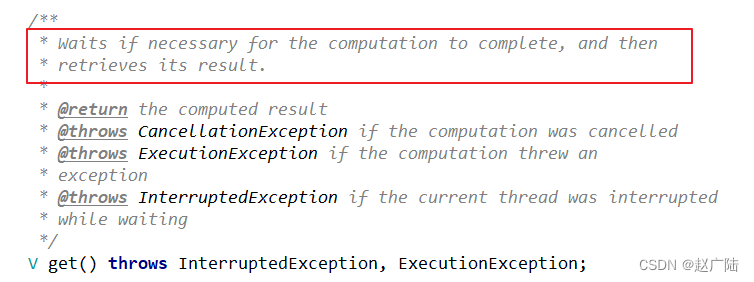
根据源码可知,当调用get()时,其会等待对应方法执行完毕后,才会返回结果,否则会一直等待。因为这个设定,所以上述代码则出现并行变串行的效果。
对于这个问题的解决,可以调用get()的重载,get(longtimeout, TimeUnit unit)。设置等待的时长,如果超时则抛出TimeoutException。
使用示例如下:
public class FutureAsyncDemo {
  static Random random = new Random();
  static ExecutorService executor =
Executors.newCachedThreadPool();
  //接收文章名称,获取并计算文章分数
   public static int
getArticleScore(String aname){
    Future<Integer> futureA =
executor.submit(new
CalculateArticleScoreA());
    Future<Integer> futureB =
executor.submit(new
CalculateArticleScoreB());
    Future<Integer> futureC =
executor.submit(new
CalculateArticleScoreC());
    doSomeThingElse();
    Integer a = 0;
    try {
      a = futureA.get();
   } catch (InterruptedException e) {
      futureA.cancel(true);
      e.printStackTrace();
   } catch (ExecutionException e) {
      futureA.cancel(true);
      e.printStackTrace();
   }
    Integer b = 0;
    try {
       b = futureB.get(3L,
TimeUnit.SECONDS);
   } catch (TimeoutException e) {
      e.printStackTrace();
   }
    catch (InterruptedException e) {
      futureB.cancel(true);
      e.printStackTrace();
   } catch (ExecutionException e) {
      futureB.cancel(true);
      e.printStackTrace();
   }
    Integer c = 0;
    try {
      c = futureC.get();
   } catch (InterruptedException e) {
      futureC.cancel(true);
      e.printStackTrace();
   } catch (ExecutionException e) {
      futureC.cancel(true);
      e.printStackTrace();
   }
    executor.shutdown();
    return a+b+c;
 }
  private static void doSomeThingElse() {
     System.out.println("exec other
things");
 }
  public static void main(String[] args)
{

 System.out.println(getArticleScore("demo")
);
 }
}
class CalculateArticleScoreA implements
Callable<Integer>{
  @Override
  public Integer call() throws Exception
{
    Random random = new Random();
    TimeUnit.SECONDS.sleep(10);

 System.out.println(Thread.currentThread().
getName());
    return random.nextInt(100);
 }
}
class CalculateArticleScoreB implements
Callable<Integer>{
  @Override
  public Integer call() throws Exception
{
    Random random = new Random();
    TimeUnit.SECONDS.sleep(20);

 System.out.println(Thread.currentThread().
getName());
    return random.nextInt(100);
 }
}
class CalculateArticleScoreC implements
Callable<Integer>{
  @Override
  public Integer call() throws Exception
{
    Random random = new Random();
    TimeUnit.SECONDS.sleep(30);

 System.out.println(Thread.currentThread().
getName());
    return random.nextInt(100);
 }
}
在上述方法中,对于B的get()设置了超时时间三秒钟,如果当调用其获取返回值时,如果超过三秒仍然没有返回结果,则抛出超时异常,接着方法会再次向下运行。
对于Future来说,它能够支持任务并发执行,对于任务结果的获取顺序是按照提交的顺序获取,在使用的过程中建议通过CPU高速轮询的方式获取任务结果,但这种方式比较耗费资源。不建议使用
总结
以上为个人经验,希望能给大家一个参考,也希望大家多多支持脚本之家。
相关文章
 这篇文章主要介绍了如何通过添加编译参数或使用Spring的工具类来获取方法参数名,还总结了不同版本的JDK和Spring项目中参数名获取的优缺点,并提供了应用场景举例,需要的朋友可以参考下2025-02-02
 这篇文章主要为大家介绍了Fastjson反序列化随机性失败示例详解,有需要的朋友可以借鉴参考下,希望能够有所帮助,祝大家多多进步,早日升职加薪2022-08-08
 这篇文章主要介绍了Springboot集成Actuator监控功能详解,有时候我们想要实时监控我们的应用程序的运行状态,比如实时显示一些指标数据,观察每时每刻访问的流量,或者是我们数据库的访问状态等等,这时候就需要Actuator了,需要的朋友可以参考下2023-09-09
 这篇文章主要介绍了浅谈String.split()遇到空字符串的几种情况,具有很好的参考价值,希望对大家有所帮助。一起跟随小编过来看看吧2020-10-10
 这篇文章主要为大家介绍了如何利用Java语言实现带GUI的气泡诗词特效,文中的示例代码讲解详细,对我们学习Java有一定帮助,感兴趣的可以了解一下2022-08-08
 运行项目变得很卡,这种情况比较能直观感受出来,Idea内存指示器,则需要设置才能看到,本文主要介绍了IDEA提示内存不足low memory的错误解决,具有一定的参考价值,感兴趣的可以了解一下2024-03-03
 依赖冲突是指项目依赖的某一个 jar 包,有多个不同的版本,因而造成类包版本冲突依赖冲突很经常是类包之间的间接依赖引起的,本文将给大家介绍Maven依赖冲突原因以及解决方法,需要的朋友可以参考下2023-12-12
 这篇文章主要介绍了MybatisPlus如何自动生成映射文件,具有很好的参考价值,希望对大家有所帮助。如有错误或未考虑完全的地方,望不吝赐教2022-01-01
IntelliJ IDEA(2020.2)的下载、安装步骤详细教程
这篇文章主要介绍了IntelliJ IDEA(2020.2)的下载、安装步骤详细教程,本文通过图文并茂的形式给大家介绍的非常详细,对大家的学习或工作具有一定的参考借鉴价值,需要的朋友可以参考下2020-08-08 用Java输出菱形本身是一个比较简单的问题,这是Java初学者都要编写的一个算法,下面这篇文章主要给大家介绍了关于java打印菱形及直角和等腰三角形的方法,文中通过实例代码介绍的非常详细,需要的朋友可以参考下2023-05-05
最新评论